Regrettable Substitution: How Next-Generation PFAS Compounds Are Entering Consumer Markets Ahead of Toxicological Understanding
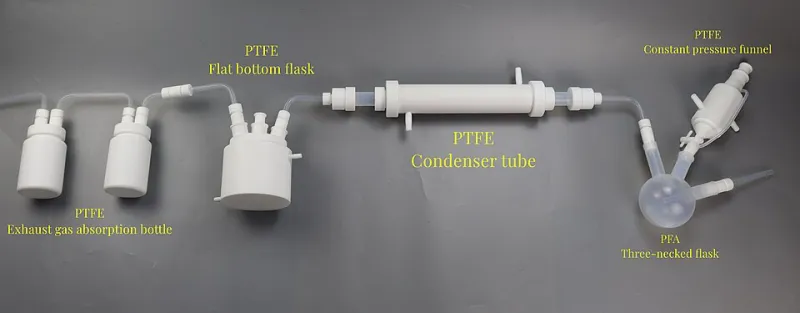
Photo: Bing-lab, CC BY-SA 4.0, via Wikimedia Commons
In 2006, under pressure from the Environmental Protection Agency and a wave of litigation stemming from contaminated water supplies in communities near manufacturing facilities, the eight largest producers of perfluorooctanoic acid (PFOA) agreed to phase out the compound by 2015. It was, by the standards of American environmental regulation, a notable achievement—the voluntary elimination of a persistent, bioaccumulative, and potentially carcinogenic chemical that had been detected in the blood of 98 percent of Americans tested in national surveys.
What followed, however, was not a clean break from fluorinated chemistry. It was a substitution.
Manufacturers seeking to preserve the performance properties that had made PFOA commercially valuable—its exceptional thermal stability, its ability to repel both water and oil, its low surface tension—turned to structurally related compounds. Perfluoroether carboxylic acids (PFECAs) such as GenX chemicals, short-chain perfluoroalkyl acids, and polyfluoroalkyl substances with modified carbon chain lengths began appearing in consumer products, food packaging, industrial coatings, and firefighting foams. These replacements were marketed, and in many cases genuinely believed, to be safer alternatives. The toxicological record, as it has accumulated over the intervening years, has repeatedly complicated that assumption.
The Architecture of Regulatory Lag
The concept of regrettable substitution—wherein a regulated chemical is replaced by a structurally analogous compound that replicates the hazard profile of its predecessor—is not new to environmental health science. It has been documented in the brominated flame retardant literature, in chlorinated solvent replacement histories, and most extensively in the PFAS family, which now encompasses more than 12,000 individual compounds by some estimates.
What distinguishes the PFAS substitution cycle from other chemical replacement patterns is the sheer scale of the compound library available to manufacturers and the speed with which novel structures can be synthesized and commercialized. Under the Toxic Substances Control Act (TSCA) as amended by the Frank R. Lautenberg Chemical Safety for the 21st Century Act of 2016, manufacturers introducing new chemical substances are required to submit a premanufacture notice (PMN) to the EPA at least 90 days before commercial production begins. The EPA may then review available data and, if it identifies an unreasonable risk, take regulatory action.
The structural limitation of this framework is the 90-day window itself. For a novel fluorinated compound with no published toxicological literature, no long-term animal studies, and no epidemiological data—because it has never been produced at scale before—90 days is wholly insufficient to generate the evidence base required for meaningful risk characterization. In practice, the EPA has repeatedly acknowledged that it lacks the resources to conduct rigorous independent assessments within the statutory timeframe, and has frequently issued consent orders permitting limited commercial production to proceed while longer-term data are generated. The chemical enters the market. The data follow—sometimes years later, sometimes not at all.
GenX and the Evidence Gap
The GenX chemical case offers perhaps the most thoroughly documented illustration of this dynamic. Introduced by Chemours (a DuPont spinoff) as a PFOA replacement at its Fayetteville, North Carolina manufacturing facility, GenX compounds were detected in the Cape Fear River—the drinking water source for approximately 350,000 residents—in 2017. The detection prompted an emergency scientific response, with researchers at the North Carolina Department of Health and Human Services and academic institutions working to characterize a compound for which no regulatory health reference value existed at the time of its commercial deployment.
Subsequent animal studies identified associations between GenX exposure and liver toxicity, immune system effects, and developmental outcomes at concentrations relevant to environmental contamination levels. A 2020 study published in Environmental Health Perspectives found that GenX compounds induced liver tumors in rats at doses that, when adjusted for human body weight, were not dramatically distant from observed environmental exposure levels in affected communities. These findings emerged more than a decade after the compound had been in commercial use.
The Fayetteville case is illustrative, but it is not exceptional. Researchers have identified analogous data gaps for dozens of PFAS replacement compounds currently present in commerce, including fluorotelomer-based substances used in food contact materials, perfluoroalkyl ether sulfonates used in industrial applications, and short-chain PFAS compounds used in textile treatments and firefighting foams.
The European Contrast
The regulatory divergence between the United States and the European Union on PFAS substitution governance is instructive, though it is important to resist an uncritical idealization of the European framework. The EU's REACH regulation (Registration, Evaluation, Authorisation and Restriction of Chemicals) operates on a fundamentally different burden-of-proof architecture than TSCA: manufacturers bear primary responsibility for demonstrating the safety of substances they introduce to the market, rather than regulators bearing the burden of demonstrating harm before restricting use.
In January 2023, the European Chemicals Agency published a universal PFAS restriction proposal—developed jointly by regulatory authorities in Denmark, Germany, the Netherlands, Norway, and Sweden—that would subject the entire class of per- and polyfluoroalkyl substances to a single, comprehensive restriction, with limited derogations for uses where no viable alternatives exist. This class-based approach directly addresses the substitution problem by closing the regulatory gap between individual PFAS compounds: a manufacturer cannot escape a restriction on PFOA by substituting GenX if both fall within the restricted class definition.
The United States has moved in a parallel direction with the EPA's 2023 proposal to designate PFOA and PFOS as hazardous substances under the Comprehensive Environmental Response, Compensation, and Liability Act (CERCLA), and with proposed maximum contaminant levels for six PFAS compounds in drinking water finalized in 2024. These are meaningful steps. However, they remain compound-specific rather than class-based, and they do not address the premarket assessment gap that allows novel PFAS structures to enter commerce before their hazard profiles are understood.
Toward a Precautionary Premarket Framework
The evidence supports a structural reform of TSCA's premarket review process for chemically defined compound classes with documented patterns of regrettable substitution. Three specific reforms warrant prioritization.
First, the EPA should be empowered—and adequately resourced—to apply class-based hazard presumptions to new chemical notifications within structurally defined families. A manufacturer introducing a novel perfluoroalkyl carboxylic acid should bear the burden of demonstrating that the new compound does not share the persistence, bioaccumulation, and toxicity characteristics of the broader chemical class, rather than the EPA bearing the burden of identifying specific risks within 90 days.
Second, the premanufacture notice period for compounds belonging to high-concern chemical families should be extended from 90 days to a minimum of 18 months, with mandatory submission of a defined minimum data set including acute toxicity, reproductive toxicity screening, environmental persistence estimates, and bioaccumulation potential. This data requirement would impose costs on manufacturers, but those costs are more appropriately borne by industry than by communities downstream of production facilities.
Third, the EPA's Safer Choice program and its green chemistry frameworks should be explicitly revised to prohibit the certification of PFAS replacement compounds that lack a minimum toxicological data package, removing the perverse incentive whereby a novel fluorinated compound can carry a government-adjacent quality signal before its safety has been adequately characterized.
Conclusion
The history of PFAS regulation in the United States is, in part, a history of scientific understanding running behind commercial deployment. Each generation of regulatory action has driven a substitution cycle that resets the evidence clock, exposing new populations to understudied compounds while the slow machinery of toxicological research catches up. Breaking this cycle does not require abandoning innovation in fluorinated chemistry—it requires establishing that the burden of demonstrating safety precedes, rather than follows, market entry. The European regulatory trajectory offers a partial model. The American regulatory architecture offers the institutional capacity to implement meaningful reform. What the current framework lacks is the precautionary orientation to demand evidence before exposure, rather than after.