Invisible Contaminants, Absent Regulations: Confronting the Microplastics Threat in US Drinking Water
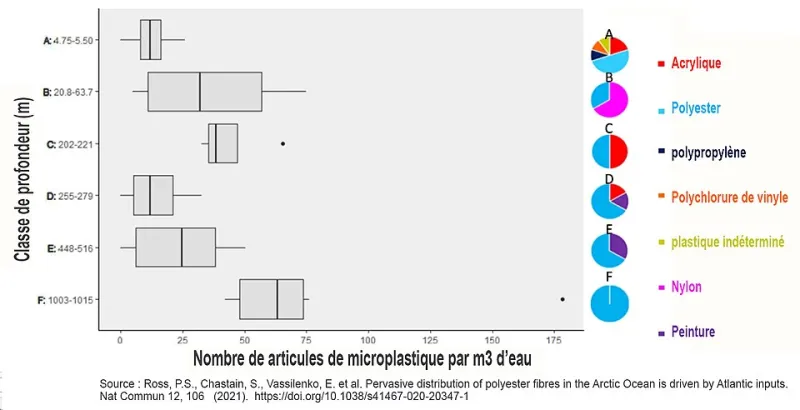
Photo: Peter S. Ross, Stephen Chastain, Ekaterina Vassilenko, Anahita Etemadifar, Sarah Zimmermann, Sarah-Ann Quesnel, Jane Eert, Eric Solomon, Shreyas Patankar, Anna M. Posacka & Bill Williams, CC BY 4.0, via Wikimedia Commons
For decades, public health infrastructure in the United States operated on a relatively straightforward premise: identify a contaminant, establish a tolerable exposure threshold, and codify enforceable limits through federal statute. That model served reasonably well for heavy metals, chlorinated solvents, and nitrates. It is proving conspicuously inadequate for microplastics—particles smaller than five millimeters in diameter, shed by synthetic textiles, packaging materials, vehicle tire abrasion, and the slow degradation of plastic waste embedded throughout the environment. What the science now reveals about their ubiquity in American drinking water stands in stark and troubling contrast to the near-total absence of federal regulatory response.
The State of the Science: What Detection Studies Are Telling Us
Research published over the past half-decade has progressively sharpened the picture of microplastic contamination in US water systems. A widely cited 2018 investigation by Orb Media, later reinforced by peer-reviewed studies in Environmental Science & Technology, found microplastic particles in tap water samples drawn from major American cities including New York, Los Angeles, and Chicago, with detection rates exceeding 80 percent across sampled sources. Subsequent work by the United States Geological Survey confirmed microplastics in treated drinking water, untreated source water, and precipitation events across geographically diverse regions.
The EPA's own research program, while methodologically rigorous, has proceeded cautiously. The agency acknowledged microplastics as a "contaminant of emerging concern" in its 2021 strategic roadmap but stopped well short of initiating the formal regulatory determination process under the Safe Drinking Water Act. The scientific community, meanwhile, has continued to accumulate evidence linking microplastic exposure—particularly nanoplastics, the sub-micron fraction—to inflammatory responses, endocrine disruption, and potential carcinogenicity, though causal dose-response relationships in humans remain an active area of investigation.
This scientific momentum has not translated into regulatory momentum. The result is a detection-regulation gap: a growing body of evidence documenting the presence and potential harm of a contaminant, met by an institutional apparatus that has yet to move from research to enforceable standard-setting.
Why the Regulatory Machinery Has Stalled
Understanding the policy inertia requires appreciating how the Safe Drinking Water Act structures regulatory decision-making. Before the EPA can establish a Maximum Contaminant Level for any substance, it must complete a formal regulatory determination, a process requiring demonstrated evidence of adverse health effects at environmentally relevant concentrations, a finding that regulation meaningfully reduces health risks, and a judgment that regulation is technically and economically feasible. Each of these criteria presents genuine scientific and legal complexity for microplastics.
First, the category itself is not a single substance. Microplastics vary by polymer type, particle size, shape, surface chemistry, and the suite of adsorbed chemical additives or environmental pollutants they carry. Establishing a unified analytical method—a prerequisite for any enforceable standard—has proven technically demanding, though standardization efforts are advancing. Second, the epidemiological literature, while suggestive, has not yet produced the kind of large-scale prospective cohort data that traditionally anchors EPA risk assessments. Third, industry stakeholders have consistently argued that premature regulation imposes compliance costs on water utilities before the harm calculus is fully resolved.
These are not trivial objections. But they should not be permitted to function as indefinite deferrals. The history of environmental health regulation in the United States—from lead in gasoline to asbestos in buildings—demonstrates that waiting for scientific certainty before initiating regulatory frameworks reliably produces preventable harm at scale.
Europe as a Regulatory Reference Point
The contrast with European regulatory philosophy is instructive, if not directly transferable. The European Union's approach to emerging chemical contaminants is animated by the precautionary principle, which permits—and in some interpretations requires—regulatory action in the face of plausible risk, even before causal chains are definitively established. The European Chemicals Agency has been actively developing monitoring frameworks and analytical harmonization protocols for microplastics since 2019. The EU's revised Drinking Water Directive, which entered into force in 2021, explicitly includes microplastics in its watch list of substances requiring monitoring, with binding parametric values under development.
Several EU member states, including Germany and the Netherlands, have gone further by funding national biomonitoring programs that track human tissue burden of microplastics alongside water quality data—creating the longitudinal epidemiological infrastructure that the United States currently lacks. France has enacted restrictions on single-use plastic applications specifically to reduce source contamination of water bodies, demonstrating that upstream prevention and downstream water quality regulation can function as complementary policy instruments.
The American regulatory tradition differs philosophically from the European precautionary model, and direct transplantation of EU frameworks into US administrative law is neither feasible nor necessarily desirable. Nevertheless, the European experience demonstrates that institutional willingness to act under uncertainty, combined with investment in monitoring infrastructure, can accelerate both scientific understanding and protective policy without waiting for perfect knowledge.
Evidence-Based Policy Recommendations
This analysis advances four interconnected policy recommendations directed at federal and state actors.
Accelerate analytical standardization. The EPA, in coordination with the American Water Works Association and academic research consortia, should prioritize the development and validation of standardized methods for microplastic detection in drinking water. This is a prerequisite for any regulatory framework and need not await a formal regulatory determination to proceed.
Initiate a formal regulatory determination under the Safe Drinking Water Act. The available evidence is sufficient to justify opening the formal determination process. This does not commit the EPA to a specific standard; it initiates the structured scientific and public deliberation that produces defensible, enforceable rules. Continued deferral forecloses that deliberation.
Invest in longitudinal biomonitoring. Congress should appropriate funding for a national biomonitoring program—potentially administered through the National Institutes of Health in partnership with the EPA—that tracks microplastic body burden in representative population cohorts over time. Such data would resolve critical uncertainties in the dose-response literature while building the epidemiological record necessary for future regulatory defense.
Pursue source-reduction policy in parallel. Regulatory limits on drinking water contamination address a downstream symptom. Effective policy must also address upstream plastic production, waste management, and stormwater runoff—the pathways through which microplastics enter source water. The EPA's existing authorities under the Clean Water Act offer underutilized tools for this purpose.
Conclusion
The microplastics question is, at its core, a test of whether American environmental health policy can learn from its own institutional history. The pattern—contaminant detected, harm suspected, regulation delayed, harm confirmed, remediation costly—has repeated itself often enough to warrant a different approach. The science is not complete, but it is sufficient. The regulatory tools exist. What remains is the institutional will to apply them before the gap between what is known and what is required becomes a public health failure that future researchers will document in retrospect.