From Copenhagen to Cleveland: A Five-Point Evidence Framework for Climate-Resilient Urban Health in American Cities
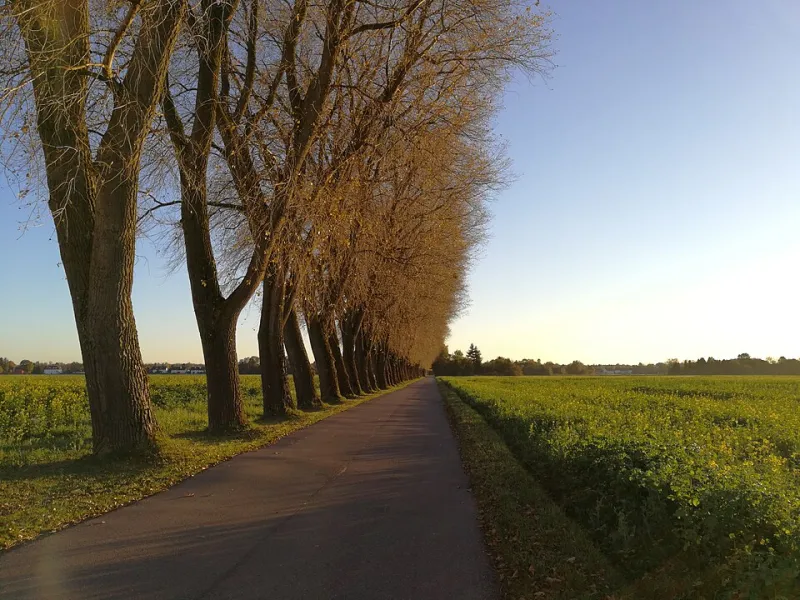
Photo: LOS DAMA! Project - Matthias Lampert, CC BY-SA 4.0, via Wikimedia Commons
Setting the Stage: Why European Urban Evidence Matters for American Cities
The summer of 2023 was the hottest on record globally, and American cities bore a measurable share of that burden. Phoenix, Arizona, recorded over thirty consecutive days above 110°F. Cook County, Illinois, issued heat emergency declarations. Houston hospitals reported elevated admissions for heat exhaustion and exacerbated respiratory conditions. These are not isolated meteorological events; they are recurring public health crises whose frequency and severity are projected to increase substantially across the continental United States over the coming decades.
European cities confronted analogous inflection points earlier. The catastrophic 2003 European heat wave, which caused an estimated 70,000 excess deaths across the continent, catalyzed a generation of urban climate adaptation investment. Cities including Copenhagen, Vienna, Stuttgart, and Amsterdam responded with systematic green infrastructure programs—urban tree canopy expansion, bioswale networks, cool corridor design, and integrated green-blue space planning—that have since been evaluated through peer-reviewed public health research. The results are instructive.
This article synthesizes that evidence base and translates it into five discrete, actionable recommendations for US municipalities. Each recommendation is grounded in published research, acknowledges the specific regulatory and financial constraints of American local governance, and identifies precedent cases where analogous strategies have been piloted domestically.
Point 1: Prioritize Tree Canopy Expansion in High Heat Vulnerability Zones
The relationship between urban tree canopy coverage and ambient temperature reduction is among the most robustly documented findings in urban environmental health research. A landmark study published in The Lancet examining seventeen European cities found that increasing urban green space coverage to at least 30% of city area could prevent up to 43% of heat-related deaths in those cities during extreme heat events.
The mechanism is well understood. Urban tree canopy reduces surface temperatures through evapotranspiration and shading, with mature deciduous trees capable of reducing localized ambient temperatures by 2–8°C. Stuttgart, Germany, has operationalized this principle through its Klimaatlas (Climate Atlas), a GIS-based planning tool that maps urban heat islands with high spatial resolution and directs canopy investment toward the highest-vulnerability zones.
For US municipalities, the translation is direct but requires intentional equity integration. Research consistently shows that tree canopy coverage in American cities is unevenly distributed along racial and income lines, with lower-income and predominantly minority neighborhoods carrying disproportionately low canopy coverage and correspondingly higher heat exposure. Cities such as Baltimore and Los Angeles have launched equity-centered urban forestry initiatives that explicitly target canopy deficits in historically disinvested neighborhoods. Federal funding through the Inflation Reduction Act's Urban and Community Forestry program provides a meaningful financial mechanism. Municipal governments should develop spatially explicit canopy equity plans that pair heat vulnerability mapping with demographic data to direct resources where both environmental and social need is greatest.
Point 2: Integrate Bioswales and Permeable Surfaces to Reduce Flooding and Respiratory Co-exposures
Green infrastructure in European cities has rarely been designed as a single-purpose intervention. Copenhagen's celebrated Cloudburst Management Plan, developed following catastrophic urban flooding in 2011, deployed an integrated network of green channels, retention basins, and permeable pavement that simultaneously manages stormwater, reduces urban heat, and improves air quality by reducing particulate resuspension from flooded surfaces.
The respiratory health co-benefits of this integrated approach are significant. Research from the Netherlands has demonstrated that green corridor design reduces roadside particulate matter (PM2.5) concentrations by intercepting vehicle-generated particles and reducing the urban heat island effect, which independently accelerates ozone formation.
American cities in humid subtropical and continental climate zones—including Atlanta, Chicago, and Miami—face compounding flood and heat pressures that make integrated green-blue infrastructure particularly well suited. Philadelphia's Green City, Clean Waters program offers a domestic precedent, having deployed over 3,000 green stormwater infrastructure assets citywide. Municipalities should explicitly evaluate respiratory health outcomes—not solely stormwater volume metrics—when designing and evaluating such programs, integrating air quality monitoring into green infrastructure performance assessment.
Point 3: Design Cool Corridors and Shade Networks as Public Health Infrastructure
Vienna's Urban Heat Island Adaptation Strategy treats shaded pedestrian corridors as functional public health infrastructure, not merely aesthetic amenities. The city has mapped pedestrian movement patterns and heat exposure indices to design a network of shaded routes connecting parks, transit nodes, and residential areas, enabling residents—particularly elderly and mobility-limited populations—to navigate the city during heat events with reduced thermal exposure.
This framing—green infrastructure as health infrastructure—carries important implications for American municipal budgeting and governance. When cool corridor investments are classified as park amenities, they compete for discretionary recreation budgets. When classified as public health interventions, they become eligible for public health emergency preparedness funding, Medicaid infrastructure investments, and federal climate resilience grants.
US cities should work across public health and urban planning departments to formally reclassify strategic green infrastructure as health infrastructure in capital planning documents, unlocking broader funding streams and elevating the political visibility of these investments.
Point 4: Leverage Green Space Access as a Mental Health Intervention
The mental health dimensions of urban green infrastructure have received growing scholarly attention in European research. A meta-analysis published in Environmental Health Perspectives synthesizing data from twenty-three European urban cohorts found statistically significant associations between residential proximity to urban green space and reduced prevalence of anxiety, depression, and perceived stress, with effect sizes comparable to moderate physical activity interventions.
Mechanism research points to several pathways: stress recovery through restorative environmental exposure, increased physical activity facilitated by accessible green spaces, and enhanced social cohesion in communities with well-maintained parks and green corridors.
For US cities grappling with a mental health crisis exacerbated by post-pandemic social disruption and climate anxiety, this evidence base offers a compelling rationale for green space investment that extends beyond environmental metrics. Municipal health departments should collaborate with parks departments to conduct green space access audits using a mental health equity lens, identifying populations with limited access and prioritizing investment accordingly. Integration of green space prescription programs—already piloted in several US health systems—with neighborhood-level infrastructure investment represents a promising convergence of clinical and environmental public health practice.
Point 5: Adopt Adaptive Governance Structures That Enable Iterative Learning
Perhaps the most underappreciated lesson from European urban green infrastructure successes is institutional rather than technical. Cities that have achieved durable environmental health gains—Amsterdam, Malmö, and Zurich among them—have done so through governance structures that embed monitoring, evaluation, and adaptive management into the planning cycle from the outset.
This stands in contrast to the common American municipal pattern of project-based green infrastructure investment followed by limited systematic outcome evaluation. Without rigorous monitoring of health outcomes—not just environmental performance metrics—it is impossible to determine which interventions are producing population health benefits and which are not.
US municipalities should establish cross-departmental environmental health monitoring units with mandates to track heat-related emergency department visits, respiratory hospitalization rates, and mental health service utilization in relation to green infrastructure deployment. These data should be publicly reported on annual timescales, enabling community accountability and iterative program refinement.
Conclusion: Evidence-Informed Adaptation, Not Direct Import
The European evidence base for green infrastructure and urban public health is robust, growing, and directly relevant to the challenges facing American cities. However, as with health policy transfer more broadly, effective adaptation requires contextual sensitivity. American cities vary enormously in climate, density, governance capacity, and demographic composition. The five-point framework presented here is designed not as a prescriptive template but as an evidence-grounded starting point for locally tailored action.
What the European experience most compellingly demonstrates is that green infrastructure investment is not a peripheral environmental amenity—it is a core public health intervention with measurable, peer-reviewed outcomes. American municipal leaders, public health officials, and urban planners have both the evidence and, increasingly, the federal funding mechanisms to act on that understanding. The question is whether institutional will and cross-sector coordination can match the scale of the environmental health challenge ahead.