Emergency Rooms as Dental Safety Net: The Cost of Treating Oral Disease After It Becomes Acute
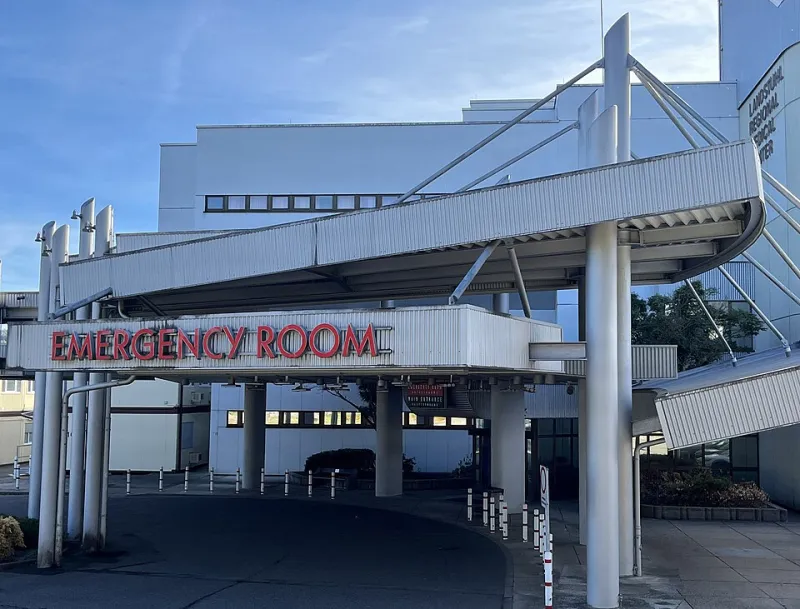
Photo: Bernhard Lashleyleidner, Public domain, via Wikimedia Commons
A patient arrives at an emergency department with facial swelling, a fever, and a tooth that has been aching for weeks. The infection is dental in origin, but the setting is medical. The hospital can provide antibiotics, pain control, and, in severe cases, surgery. What it usually cannot provide is the definitive dental treatment that would prevent the next visit. This is not an isolated case. It is a structural feature of American health coverage.
The Case That Should Not Be in the ER
Emergency departments are legally obligated to stabilize patients, not to deliver comprehensive dental care. That mandate saves lives when infections spread to the jaw or bloodstream, but it also makes the ER an expensive and incomplete substitute for routine oral care. A patient may leave with the infection temporarily controlled and the underlying decay untouched. The cycle repeats until the tooth is extracted, the infection becomes severe, or the patient finds a dentist willing to accept a low reimbursement rate.
The cost is borne across the system. Hospitals absorb uncompensated emergency visits. Patients absorb pain, lost work time, and repeat courses of antibiotics. Public programs absorb avoidable hospitalizations. The common thread is not a lack of clinical knowledge. It is a coverage and delivery system that treats the mouth as separate from the body until the body forces the issue.
Medicaid's Optional Benefit and the Coverage Cliff
For adults, Medicaid dental coverage is optional. States may offer no benefit, emergency-only coverage, or a limited package of preventive and restorative services. The result is a map of uneven access. An adult with Medicaid in one state may receive cleanings and fillings; an adult in another may qualify only for extraction or pain relief. When coverage is emergency-only, the system is designed to respond after disease has progressed, not before.
Medicare is similarly limited for routine dental care, which leaves older adults without a reliable pathway to prevention. Private dental insurance often carries annual maximums and separate deductibles, creating a financial cliff for patients who need crowns, root canals, or periodontal treatment. The uninsured face the full price of care in a market where prices are rarely posted and rarely negotiable.
Workforce Shortages and the Geography of Care
Even where coverage exists, the workforce may not. Dental deserts, rural counties without a practicing dentist, and clinics with months-long waiting lists are common. Community health centers and dental schools provide safety-net care, but capacity is finite. Medicaid reimbursement rates are often low enough that private dentists limit their participation, which narrows the network further.
The shortage is not only about the number of dentists. It is about the distribution of hygienists, assistants, and administrative staff who make a clinic viable. A county may have a dentist but no one to staff the chair. A mobile clinic may reach a school once a year but cannot provide continuity. These are delivery problems, not merely insurance problems, and they require workforce policy as much as coverage expansion.
The Medical-Dental Divide
The separation between medical and dental insurance is one of the most consequential administrative choices in American health care. It determines which providers are paid, which treatments are covered, and which conditions are treated as medical. Oral infections can worsen diabetes, complicate pregnancy, and increase the risk of cardiovascular events. Yet the mouth remains outside many medical benefit designs.
This divide is not scientifically grounded. It is historical and institutional. Hospitals have emergency departments; dental schools have clinics; Medicaid has separate dental programs; Medicare has no routine dental benefit. Patients navigate these boundaries, but the boundaries do not reflect the continuity of human biology.
What Hospitals Absorb
When prevention fails, hospitals become the default provider. Emergency department visits for dental conditions are preventable in principle, but they are rational for patients who cannot find or afford a dentist. Hospitals may offer antibiotics and referrals, but referrals are only useful if a willing provider exists. In many communities, the referral loop closes without treatment.
The financial burden falls unevenly. Safety-net hospitals treat a disproportionate share of uninsured and Medicaid patients. Rural hospitals operate on thin margins. When dental visits become emergency visits, the cost shifts to institutions that are already strained, and the patient receives episodic care rather than a solution.
Reframing Oral Care as Medical Necessity
The case for treating oral care as medical necessity rests on outcomes, not sentiment. Preventable dental disease causes pain, infection, lost productivity, and avoidable hospitalization. It interacts with chronic conditions and complicates prenatal care. A system that covers the treatment of infection but not the prevention of infection is not medically coherent.
A more rational design would include a defined adult dental benefit in Medicaid, a Medicare dental benefit that supports prevention and maintenance, and reimbursement rates that make participation viable for providers. It would invest in community-based prevention, school sealant programs, and teledentistry where appropriate. It would also require hospitals and dental providers to share data so that repeat emergency visits trigger a care pathway rather than another course of antibiotics.
The emergency department will always have a role in treating severe dental infections. It should not be the first and only place where millions of Americans encounter oral health care.