Delayed by Design: How Pay-for-Delay Patent Settlements Keep Generic Drugs Off American Shelves
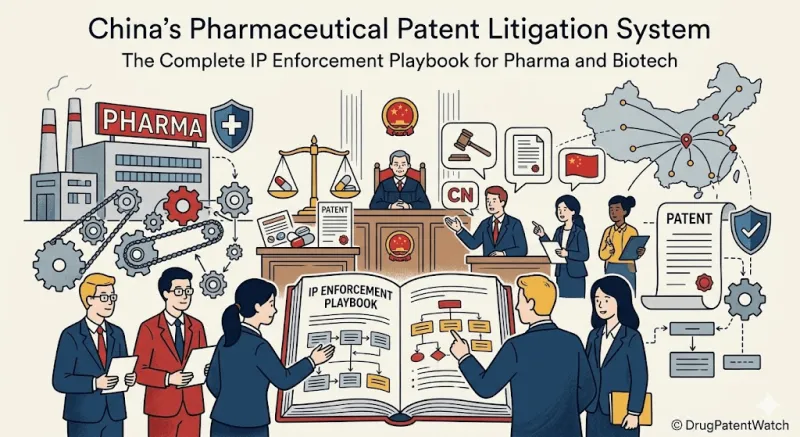
Photo: pharmaceutical patent law documents generic drug bottles courtroom, via www.drugpatentwatch.com
A Legal Mechanism With Illegal Consequences
In theory, the Hatch-Waxman Act of 1984 was a legislative compromise designed to serve two masters simultaneously: it incentivized pharmaceutical innovation by protecting branded manufacturers' patent rights while creating an expedited pathway for generic drug approval once those patents expired. For nearly four decades, the law has functioned as the foundational statute governing the American generic drug market. In practice, however, a specific class of legal settlement has systematically hollowed out its competitive intent.
Pay-for-delay agreements—formally known as reverse payment settlements—occur when a branded drug manufacturer pays a generic competitor to abandon a patent challenge and delay market entry. The transaction is, on its face, a private legal settlement. Beneath that surface, it functions as a purchased monopoly extension. The generic manufacturer receives a financial transfer—often disguised as a licensing arrangement, a supply contract, or a side business deal—and in exchange agrees to remain off the market for a defined period, sometimes years beyond what the original patent would have justified.
The consequences for American patients are not abstract. A 2023 analysis by the American Association of Retired Persons estimated that pay-for-delay agreements cost consumers and public health programs an estimated $3.5 billion annually in excess drug expenditures. For individuals managing chronic conditions such as hypertension, diabetes, or epilepsy, the difference between a branded medication and its generic equivalent can represent hundreds of dollars per month—a gap that frequently determines whether a prescription is filled at all.
The Regulatory Vacuum at the Center of the Problem
The Federal Trade Commission has been sounding alarms about reverse payment settlements for more than two decades. Beginning in the early 2000s, the agency began publishing reports cataloguing the frequency and financial scale of these agreements, characterizing them as presumptively anticompetitive under antitrust law. The FTC's position was eventually vindicated—partially—by the Supreme Court's 2013 ruling in FTC v. Actavis, which held that pay-for-delay settlements could, under certain circumstances, violate antitrust statutes and were subject to rule-of-reason scrutiny.
Actavis was widely interpreted as a significant victory. In practice, its impact has been constrained. The ruling did not prohibit reverse payment settlements outright; it established that they were challengeable, not that they were impermissible. Litigation remains the primary mechanism through which these agreements can be contested, and the burden of proof falls on the agency or private plaintiff bringing the challenge. Each case requires a resource-intensive investigation into the specific terms of a given settlement, the nature of the underlying patent dispute, and the degree to which the payment exceeded what could be reasonably attributed to avoided litigation costs.
The Food and Drug Administration, meanwhile, occupies an even more circumscribed role. The agency receives notification of certain settlement agreements under the Medicare Prescription Drug, Improvement, and Modernization Act of 2003, which requires that the FTC and the FDA be informed when branded and generic manufacturers reach deals involving delayed market entry. Notification, however, is not authorization. The FDA has no independent statutory power to reject or modify these settlements, regardless of their competitive implications. The agency's function in this context is closer to a passive registry than an active regulatory check.
The Anatomy of a Delayed Market
Understanding why these settlements persist requires examining the incentive structure they create for both parties. From a branded manufacturer's perspective, the calculus is straightforward: a single day of market exclusivity for a blockbuster drug can generate revenues in the tens of millions of dollars. Paying a generic competitor a fraction of that value to remain off the market is, in purely financial terms, a rational business decision. The payment is not a concession—it is an investment in continued pricing power.
For generic manufacturers, the arrangement is similarly attractive. Litigating a patent challenge under the Hatch-Waxman framework is an expensive and uncertain enterprise. The 180-day market exclusivity period awarded to the first successful generic challenger is a valuable prize, but it is not guaranteed. Accepting a settlement payment eliminates litigation risk while delivering a defined financial return, even if it forecloses the possibility of earlier market entry.
The party with no seat at the negotiating table—and no mechanism for influencing the outcome—is the patient. Neither the branded manufacturer nor the generic challenger has a structural incentive to prioritize timely access to affordable medication. The legal framework that governs their dispute resolution actively accommodates agreements that delay it.
Structural Disparities in Who Bears the Cost
The distributional consequences of pay-for-delay settlements fall disproportionately on Americans with limited economic resources. Federal programs including Medicaid and the Children's Health Insurance Program absorb a substantial share of inflated drug costs, but individual patients in high-deductible insurance plans, those in coverage gaps, and the uninsured bear direct out-of-pocket exposure to branded pricing.
For low-income patients managing multiple chronic conditions, the cumulative effect of delayed generic availability across several drug categories can render adherence to prescribed treatment regimens economically impossible. Research consistently demonstrates that cost-related nonadherence is associated with increased hospitalizations, accelerated disease progression, and elevated mortality risk. The mechanism by which a private patent settlement translates into a preventable death is indirect but documentable.
Rural communities, which already face diminished pharmacy access and higher rates of chronic disease burden, are particularly vulnerable to these pricing dynamics. When the nearest pharmacy is a significant drive away and generic alternatives are unavailable, patients face compounded barriers that the current regulatory architecture does nothing to address.
The Case for Legislative Intervention
The limitations of the current enforcement framework have prompted repeated legislative proposals, none of which has yet achieved enactment. The Preserve Access to Affordable Generics and Biosimilars Act, introduced in various forms over multiple Congresses, would amend antitrust law to create a rebuttable presumption that reverse payment settlements are anticompetitive, shifting the burden of proof to the settling parties to demonstrate otherwise. A complementary approach would grant the FDA affirmative authority to deny or conditionally approve settlement agreements that delay generic market entry beyond what underlying patent validity would justify.
Critics of these proposals argue that eliminating the financial incentive for settlement would drive more patent disputes to full litigation, creating uncertainty and potentially delaying some generic approvals even further. This argument, while not without merit, does not adequately account for the systemic harm produced by a regime in which the certainty of delay is routinely purchased. A legal framework that permits monopoly extension as a negotiated commercial outcome is not protecting innovation—it is subsidizing market foreclosure.
The European regulatory model offers instructive contrast. The European Commission has pursued pay-for-delay cases aggressively under competition law, imposing substantial fines on pharmaceutical companies whose settlement agreements were found to restrict generic market entry. While the legal and institutional architecture differs from the American context, the underlying principle—that private agreements cannot be permitted to override the public interest in competitive pharmaceutical markets—translates across jurisdictions.
Watching Without Acting
The structural failure at the heart of the pay-for-delay problem is not one of regulatory incompetence or bad faith. The agencies nominally responsible for overseeing this space—the FTC, the FDA, and, to a lesser extent, the Department of Justice—understand the problem with considerable sophistication. What they lack is authority commensurate with the scale of the harm.
Until Congress acts to close the statutory gap that allows reverse payment settlements to function as legally protected delay mechanisms, the regulatory posture will remain one of observation without intervention. Patients who cannot afford branded medications while their generic equivalents sit in legal limbo are not the collateral damage of an imperfect system. They are the predictable and documented consequence of a policy failure that has persisted for two decades, with full institutional awareness and insufficient political will to correct it.