Undetected and Unregulated: The Case for Federal Environmental Health Standards in American Hospital Systems
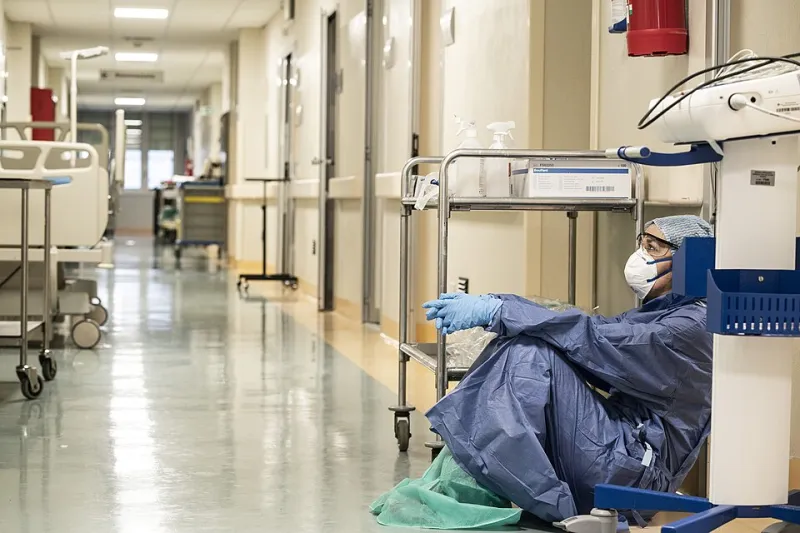
Photo: Alberto Giuliani, CC BY-SA 4.0, via Wikimedia Commons
American hospitals are paradoxical institutions. They exist, by definition, to identify and treat harm to the human body, yet many lack the institutional infrastructure to detect the environmental and occupational hazards that may be generating that harm within their own walls. From volatile organic compounds circulating through aging HVAC systems to chemical exposure risks in surgical suites and oncology wards, the environmental health profile of a typical US hospital is poorly characterized, inconsistently monitored, and subject to no single authoritative regulatory standard.
This is not a minor administrative gap. It is a structural failure with measurable consequences for patient safety, worker health, and the credibility of healthcare institutions as stewards of public wellbeing.
A Fragmented Regulatory Inheritance
The regulatory architecture governing environmental health in American hospitals is, to put it plainly, an inheritance of historical accident rather than deliberate design. The Occupational Safety and Health Administration (OSHA) maintains jurisdiction over worker exposure to specific chemical agents—glutaraldehyde in sterilization units, for instance, or anesthetic gases in operating theaters. The Environmental Protection Agency (EPA) addresses certain categories of medical waste and ambient air quality. The Joint Commission, a non-governmental accrediting body, sets operational standards that touch on environmental safety. State health departments add yet another layer of authority, with mandates that vary dramatically from California to Mississippi.
The result is a system in which regulatory responsibility is distributed across multiple agencies with overlapping, and sometimes contradictory, mandates. No single entity is charged with ensuring that a hospital has a comprehensive, evidence-based protocol for environmental health hazard detection—one that integrates air quality surveillance, chemical inventory management, noise exposure monitoring, and biological contaminant tracking into a coherent institutional framework.
For comparison, consider the approach adopted across much of Northern and Western Europe. In Germany, Denmark, and the Netherlands, national occupational health statutes explicitly require healthcare institutions to conduct systematic workplace risk assessments—Gefährdungsbeurteilungen in the German regulatory tradition—that encompass environmental exposures as a defined category. These assessments are not optional or periodic; they are ongoing, documented, and subject to external audit. French hospital networks operating under the jurisdiction of the Agence nationale de sécurité sanitaire de l'alimentation, de l'environnement et du travail (ANSES) are similarly required to maintain environmental monitoring programs that cover indoor air quality and chemical hazard inventories.
The contrast with the American approach is not subtle. It is categorical.
What the Evidence Shows
The public health literature on environmental exposures within healthcare settings has grown substantially over the past two decades, and its findings are difficult to dismiss. A 2019 study published in Occupational and Environmental Medicine documented elevated urinary biomarkers for phthalate exposure among nurses working in facilities that used PVC-based medical tubing without substitution protocols. Research from the National Institute for Occupational Safety and Health (NIOSH) has consistently identified healthcare workers as among the occupational groups most frequently exposed to hazardous drugs, with inadequate containment practices documented in facilities of every size and type.
Indoor air quality within hospitals presents an equally concerning picture. A systematic review conducted by researchers at the Harvard T.H. Chan School of Public Health found that particulate matter concentrations in hospital corridors adjacent to construction zones routinely exceeded thresholds associated with adverse respiratory outcomes—a finding with particular relevance given the scale of ongoing hospital construction and renovation across the United States. Yet few institutions maintain continuous air quality monitoring systems, and fewer still have protocols that automatically trigger clinical or operational responses when threshold concentrations are breached.
The absence of standardized detection protocols means that many of these exposures go unidentified not because the science is uncertain, but because no one is systematically looking.
The Decentralization Problem
Advocates of the current decentralized approach often argue that regulatory flexibility allows institutions to tailor their environmental health programs to local conditions—the specific chemical inventory of a given facility, regional air quality baselines, or the particular patient populations served. This argument has surface plausibility but does not survive empirical scrutiny.
Decentralization in this context does not produce tailored excellence; it produces uneven performance. Larger academic medical centers, with dedicated environmental health and safety departments and access to institutional research capacity, tend to perform reasonably well. Community hospitals and critical access facilities—which serve disproportionately rural and economically vulnerable populations—frequently lack the resources, expertise, or regulatory incentives to implement even basic hazard detection programs. The communities most likely to bear the cumulative burden of environmental health inequity are thus also the least likely to receive protection within the healthcare settings meant to serve them.
This distributional inequity is not incidental. It is a predictable consequence of a regulatory design that places the burden of initiative on individual institutions rather than establishing a uniform floor of protection.
Toward a Unified Federal Framework
What would an adequate federal response look like? The evidence points toward several core elements.
First, a unified environmental health standard for healthcare facilities should be developed through a coordinated interagency process involving OSHA, the EPA, the Centers for Disease Control and Prevention (CDC), and the Agency for Toxic Substances and Disease Registry (ATSDR). This standard should establish mandatory baseline requirements for indoor air quality monitoring, chemical hazard assessment, and occupational exposure surveillance, with implementation timelines calibrated to facility size and type.
Second, the standard should require facilities to designate qualified environmental health officers responsible for maintaining compliance documentation and reporting aggregate exposure data to a centralized federal repository. This data infrastructure would, over time, generate the epidemiological evidence base necessary to refine standards and identify emerging hazards—a feedback loop that the current fragmented system is constitutionally incapable of producing.
Third, federal funding mechanisms—potentially through the Health Resources and Services Administration (HRSA) or the Hospital Preparedness Program—should be established to support implementation in resource-constrained facilities, ensuring that the regulatory burden does not fall disproportionately on the institutions serving the most vulnerable populations.
None of these proposals is technically novel. Each draws on regulatory models that have demonstrated operational feasibility in comparable institutional contexts, both within the United States and across European health systems. What has been lacking is not the evidence or the policy architecture. What has been lacking is the political will to recognize environmental health hazard detection in hospitals as a federal responsibility rather than an institutional preference.
Conclusion
The absence of standardized environmental health protocols in American hospitals is not an oversight that can be addressed through voluntary guidelines or accreditation incentives alone. It is a systemic gap that reflects broader tensions in American regulatory culture between federal authority and institutional autonomy—tensions that, in this domain, are costing healthcare workers their health and patients their safety. European experience demonstrates that a coherent, evidence-based national framework is achievable without sacrificing operational flexibility. The question for American policymakers is whether the evidence, now substantial and consistent, is finally sufficient to compel action.